2026-11-27 ·
Signs Your Garage Door Springs Are Wearing Out in Houston
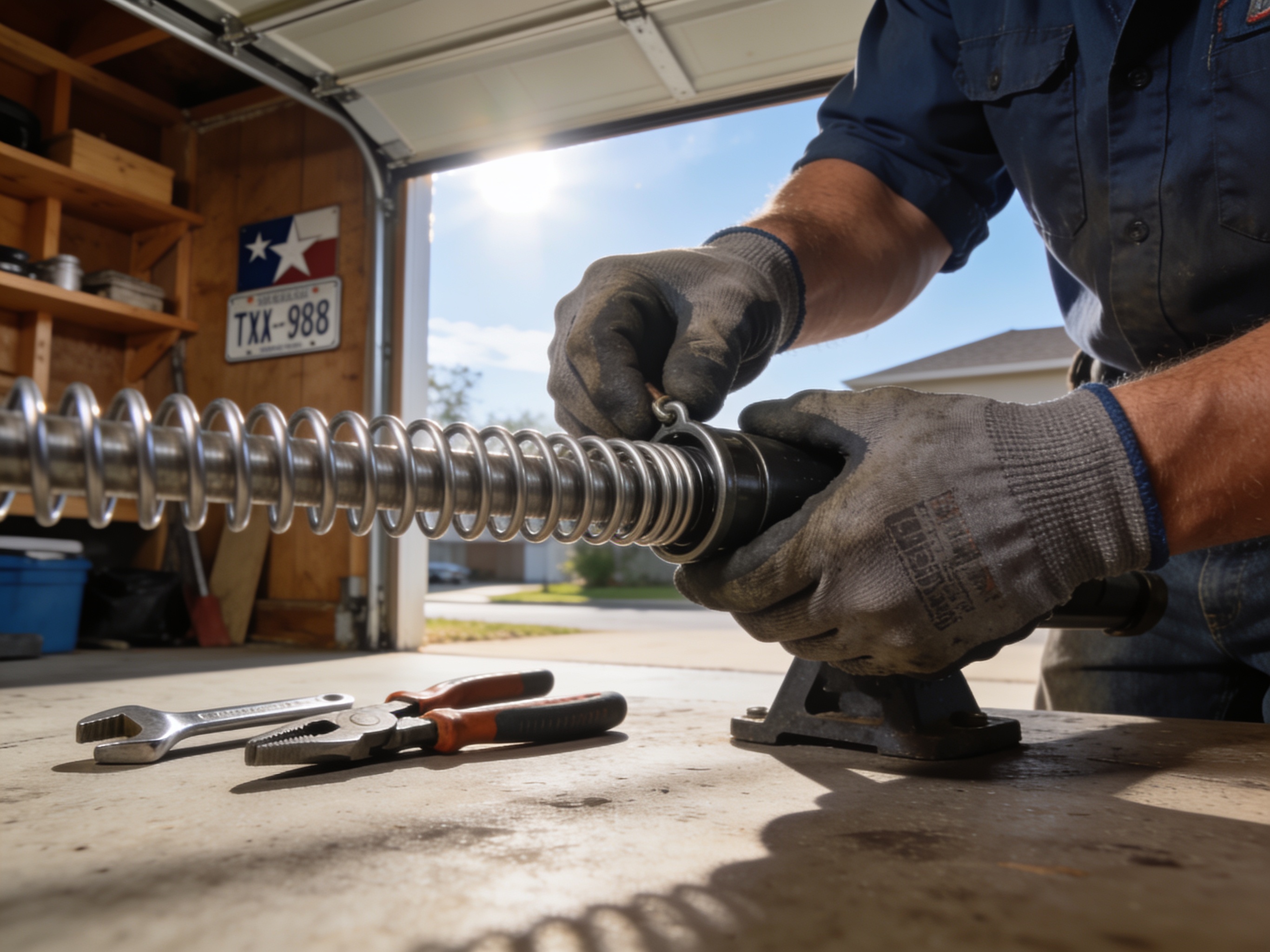
Garage door springs do most of the lifting every time the door moves, and in Houston they work in heat and humidity that wear steel faster than in drier climates. A spring rarely fails without warning. It usually shows signs for weeks first, and knowing what to look for means the door can be inspected before a spring breaks and leaves the door stuck.
A Visible Gap in the Coil
A torsion spring is a tight coil of steel mounted above the door. When it is in good shape, the coils sit close together along the shaft. A visible gap between coils, or a spring that looks stretched and uneven, is one of the clearest signs of wear. Extension springs along the sides of the door can show the same kind of separation. If you can see daylight through a gap in the coil, the spring has lost tension and should be inspected.
Rust and Corrosion in Houston Humidity
Houston humidity works its way into every part of a garage door, and springs are no exception. Surface rust on the coils, the winding cones, or the end bearings is common here, and it is more than cosmetic. Rust thins the steel and creates rough spots where the coil can catch and bind. A spring that is rusted through in places is weaker than it looks and can fail without further warning. Keeping the springs clean and lightly lubricated slows this down, but once corrosion has set in, an inspection is the right next step.
A Door That Feels Heavy or Lifts Unevenly
A balanced door should lift smoothly and stay put when raised halfway. If the door suddenly feels much heavier when lifted by hand, or if one side rises faster than the other, the springs are no longer sharing the load evenly. An uneven lift puts extra strain on the opener, the cables, and the track, and it is one of the most common early signs that a spring is wearing out.
A Loud Bang From the Garage
When a torsion spring breaks, it usually lets go with a loud bang that sounds like something heavy fell in the garage. After that, the door will feel far too heavy to lift and may only rise a few inches. If you hear that sound, do not keep running the opener. The opener is not built to lift the full weight of the door on its own, and forcing it can damage the motor and the door panels.
An Opener That Strains
An opener that groans, hesitates, or stops partway through a cycle is often fighting a door that the springs no longer help to lift. The motor, the drive chain or belt, and the rail all take the extra load. If the opener has started working harder than it used to, the springs are worth checking before the opener is blamed.
A Sagging or Crooked Door
A door that hangs crooked when closed, or sags on one side when partly open, is often held unevenly because one spring has weakened while the other still holds. The track and rollers take the extra load, and the door can start to bind or rub. A crooked door is a sign to have the springs, cables, and drums checked together, since they share the load.
Why Worn Springs Should Not Be Ignored
A worn spring does not just make the door heavy. It puts uneven load on the cables, the drums, the rollers, and the opener, and each of those parts wears faster when the springs are not doing their share. A spring that finally breaks can drop the door suddenly, damage the track and panels, and leave a car stuck inside the garage. The longer a worn spring is left, the more parts it can take with it when it fails.
What an Inspection Covers
An inspection starts with the door closed, then opened, then held at mid-travel, so the balance can be checked at each point. We look at the springs for gaps between coils, rust, and stretching, and check the winding cones and end bearings. We check the lift cables for fraying, the drums for wear, and the rollers and tracks for binding. We test the door by hand to see whether it stays put at mid-height, and we check the opener's force settings and the safety reversal. After the inspection, we explain what we found, show you the worn parts, and set out the findings and the scope in writing before any work begins, so you can see what needs attention and why.