2026-11-27 ·
Garage Door Maintenance Checklist for Houston Homes Before Hurricane Season
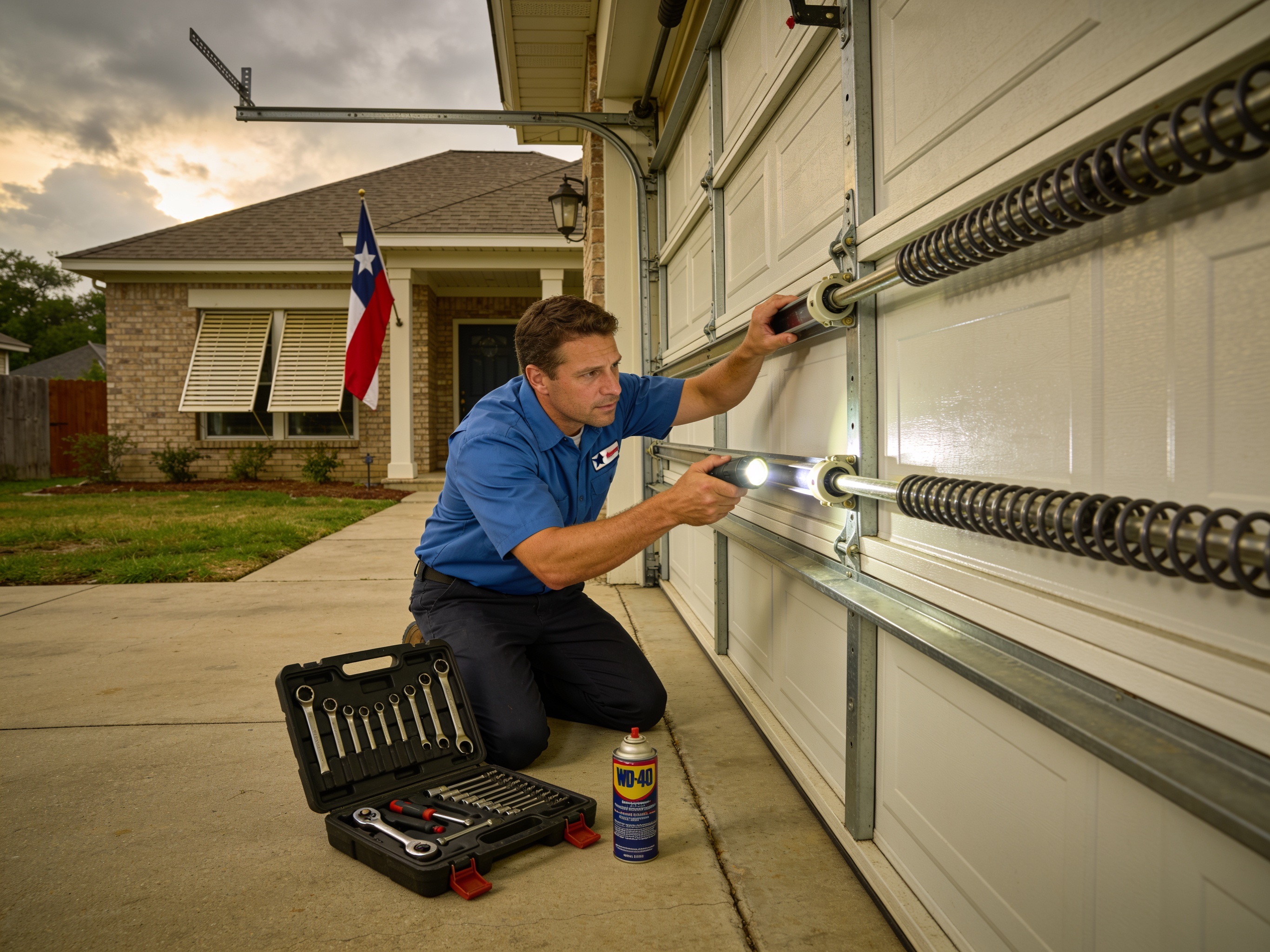
A complete pre-storm check of your garage door takes about an hour and most of it needs no tools. Before hurricane season starts on June 1, confirm the door opens and closes smoothly by hand and under power, inspect the tracks, rollers, springs, and bottom seal, and test the opener and its safety sensors. Small problems found in May are simple to put right. The same problems found while a storm is approaching can leave the door jammed, unable to resist wind pressure, or stuck shut when you need to evacuate.
Test the Door Before the Season Starts
Start by disconnecting the opener and lifting the door by hand from the inside. A properly balanced door should rise with light effort and stay in place when you let go halfway up. If it drops quickly, slams down, or resists sharply, the springs are worn or out of balance, and the opener is working harder than it should. Repeat the test from the outside after reconnecting the opener, then run the door through a full cycle, listening for grinding, popping, or a pause in the middle of travel.
Watch for uneven movement as well. If one side of the door rises faster or sits lower than the other, a cable or spring on one side may be failing. Write down any sound or motion that seems unusual, because those notes help a technician narrow the problem quickly. Spring work is one of the more common pre-season repairs, and if the test shows a broken or heavily worn spring, garage door spring repair and replacement should be scheduled before a storm rather than after.
Inspect the Tracks, Rollers, and Hinges
Tracks take a lot of abuse in Houston, where summer humidity, dust, and sudden downpours all work on the metal. Look along both vertical and horizontal track sections for bent areas, loose mounting bolts, and gaps where the track no longer meets the wall or ceiling bracket. Even a slight bend can cause the door to bind, and wind can push a door off track if the track is already misaligned. Tighten any loose hardware with a socket set, but do not force a bent track back into shape yourself.
Rollers deserve a close look. Nylon rollers that have cracked, flattened, or lost their bearing noise are common, and they should be replaced rather than oiled. Check each hinge and roller bracket for rust or loose fasteners. Lubricate the rollers' bearings and the hinge pivot points with a silicone or lithium-based spray, and wipe off excess so grit does not stick to the surface. Avoid heavy grease on the tracks themselves, since it attracts dirt.
Check the Weatherstripping and Bottom Seal
Storm-driven rain is the most common way water enters a garage, and the seals are your first defense. Close the door and look from inside for daylight around the perimeter. Run a flashlight along the top and sides of the door, then check the rubber bottom seal from the floor. A seal that is cracked, compressed flat, or pulled away from the door bottom will let water and debris pass under the door during heavy wind-blown rain.
Replace the bottom seal if it no longer reaches the concrete evenly across the full width. Many seals slide into a retainer channel and can be swapped with basic tools. Clean the side and top weatherstripping too, because mud, pollen, and grit can prevent it from compressing properly. Inspect any windows in the door panels, since loose glazing or cracked panes are weak points under strong wind. A wet garage can also raise humidity, which is one reason lower-grade opener and spring parts corrode faster in this region.
Verify the Opener, Remote Batteries, and Safety Sensors
The opener is often the last thing homeowners test, yet it is the piece that determines whether you can get in or out during a power outage or after a storm. Replace remote batteries now and keep a spare keypad or wall control code written down somewhere accessible. Confirm the opener's emergency release cord hangs within reach and pulls cleanly. Check that the door reverses when it meets an obstruction, and that the photo-eye safety sensors on both sides align and are free of cobwebs and sun glare.
If the door moves slowly, stutters, or makes straining noises only during humid weather, you are likely seeing the same symptoms covered in why your garage door is slow or jerky when humidity spikes in Houston. Those issues often show up before a storm, when pressure and moisture rise together. If the opener itself has stopped responding, a garage door repair visit can determine whether the problem is the logic board, the drive, or the safety circuit.
When to Call a Professional Before Storm Season
Some pre-storm findings are safe to handle yourself: tightening bolts, replacing seals, changing batteries, and cleaning sensors. Others call for a trained technician. Broken springs, frayed or slipped cables, panels that have separated, and tracks that are badly bent should not be worked on without the proper winding bars, clamps, and experience, because torsion springs store enough energy to cause serious injury. Calling for service in late spring also avoids the rush that follows the first named storm in the Gulf.
When you request an appointment, describe what you saw during the tests: the sounds, the uneven movement, and any sections of the door that refused to close fully. Ask for a clear explanation of what needs repair and what can wait. A door that opens and closes evenly, seals tightly, and reverses reliably at the sensors is in far better shape to handle heavy rain, gusting wind, and the unexpected power interruptions that often come with Houston storms. Completing this checklist in May means your garage is ready before the season begins, not scrambling when the forecast turns.