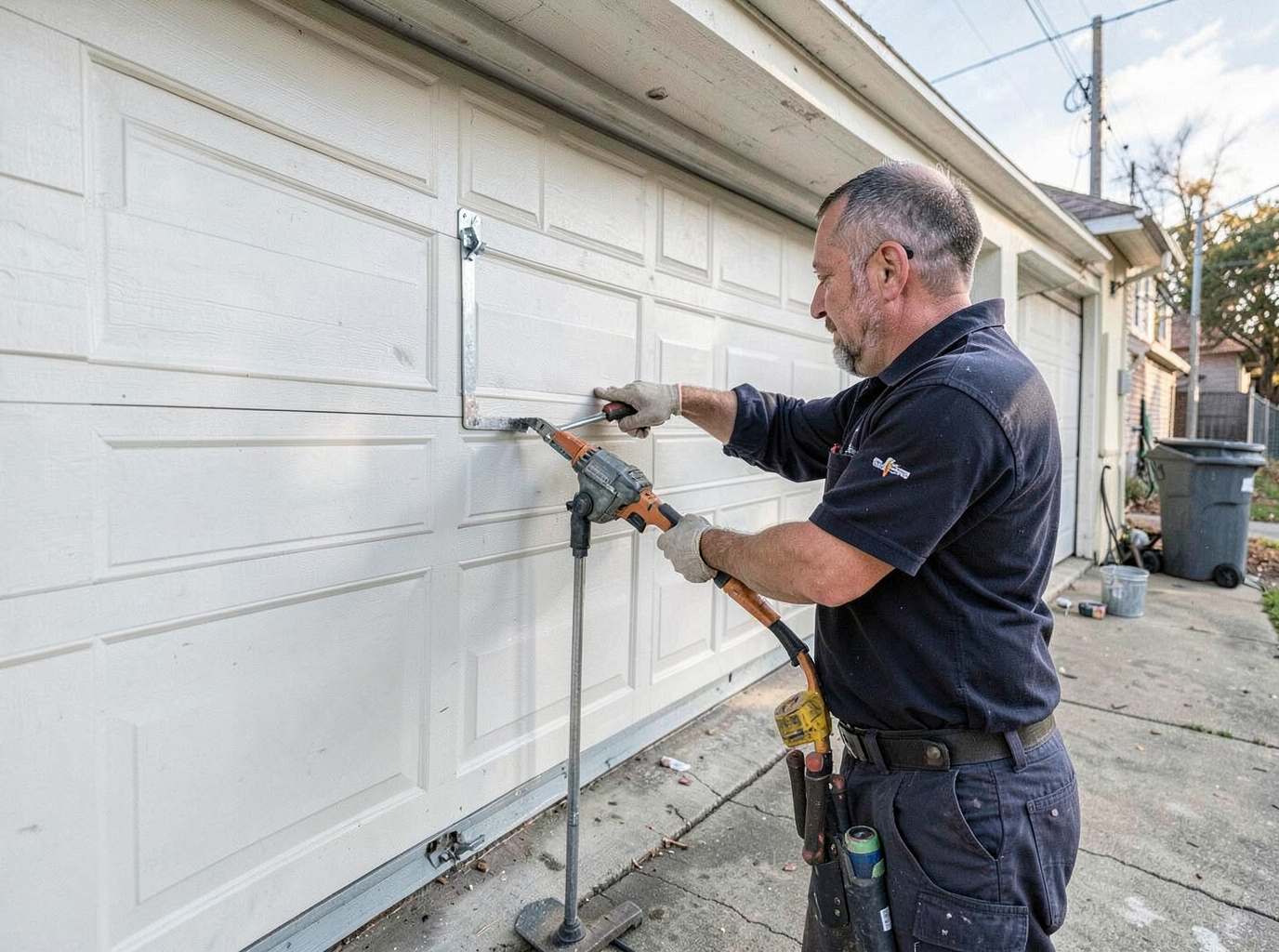
Garage Door Repair Houston TX is run from 7763 Hammerly Blvd, and we work on residential and light commercial doors across the west side of Houston, including the Spring Branch and Memorial corridors. A door that will not close, bangs when it moves, or stops halfway up is usually telling you something specific. We find that cause, show you the worn or failed part, and explain your options in plain language before any work begins.
Why Choose Us for Garage Door Repair in Houston. Most garage door calls start with a homeowner who has already been given a confusing explanation of the work needed. We do it differently. Before we recommend a repair, we walk through the door's springs, cables, rollers, hinges, tracks and opener, and we tell you which parts are failing, which are wearing but still usable, and which can wait. We inspect the door first and set out the findings and the scope in writing before any work begins, so you know what is being done and why. We do not add surprise line items after the ladders are down.
Workmanship you can inspect is a core part of how we operate. When we replace a torsion spring or a set of rollers, we leave the old parts with you if you want to see the wear for yourself, and we explain what each failure looked like. Our crews are trained to set tension safely and to check door balance before they close the job, because a door that is out of balance is hard on the opener and a safety risk for anyone nearby. Quality over quantity is how we measure a good visit. A quick patch that fails in six weeks is no substitute for doing it properly once.
We also think about the rest of the house. Houston garages often share a wall with living space, sit beside driveways that take heavy vehicle traffic, and house things that need to stay dry. We check the door seals, the threshold, and the alignment of the header bracket so the repair holds up, not just the single part that broke. If we see something that needs attention later, we tell you and let you decide on timing.
Why Now Is a Good Time to Look at Your Garage Door. Houston does not give a garage door an easy life. Summer heat in this city can push interior garage temperatures well above what the outside thermometer shows, and that heat softens lubricants, dries out weatherstripping and stretches the metal in springs until they lose their rated balance. Once the humid season sets in, moisture gets into hinges, roller bearings and steel tracks, and the surface rust that starts there can quietly lock up a door that was working fine a month earlier.
Hurricane season, which runs from June through November along the Gulf Coast, adds another reason to act early. Wind-driven rain finds gaps around bottom seals and tracks that were never noticed in dry weather, and a door that is already tired is far more likely to bend a track or jam when a storm pushes against it. Getting the door balanced, the seals replaced and the opener checked before the forecast turns is much easier than making emergency repairs with water on the floor.
Houston's expansive clay soil also moves slowly under foundations through wet and dry cycles. Over time that movement can shift the garage slab and the header that holds the door track, leaving the door slightly out of square. A small misalignment might only make the door sound rough at first, but it puts uneven load on the springs and the opener, and that uneven load is how a small inspection finding turns into a broken cable on a Saturday morning. Catching it now is simpler and usually less disruptive than waiting for a failure.
Proof: How We Do Garage Door Repair the Right Way. We follow the same sequence on every call, because it is how a repair holds up over time. First, we inspect the door with it closed, opened and in the middle of its travel. We look at the springs, cables, drums, rollers, hinges, track alignment and the opener's force and limit settings, and we note anything that is out of spec. Second, we explain what we found, show you the parts involved, and set out the findings and the scope in writing, listing each repair separately.
Once you approve the work, we isolate the opener, secure the door, and perform the repair in order. Spring work comes first, because the tension has to be set correctly before the rest of the door can be balanced. Then we replace worn rollers and hinges, clean and lubricate the tracks, and realign the sections so they run square. Last, we test the door through a full cycle, check the auto-reverse and safety sensors, and confirm the door closes fully and stops when it meets an obstacle. We do not hand you a door until it has passed those checks and you have seen them run.
Unique Scenario: A Shifted Track After a Storm in the Spring Branch Area. A homeowner near the Spring Branch area called after a heavy overnight storm left their two-car door stuck about halfway open. The opener was still humming, but the door would not move past the same spot in either direction. The family had been pulling the emergency release and pushing by hand, and the bottom panel had started to buckle.
When we arrived, the first thing we checked was the track. The vertical run on the driver's side had pulled loose from its mounting bracket, and one roller had jumped the track at the top curve. The impact had also bent a section of the horizontal track, which is why the door looked stuck at one height. The opener's force setting was fine. The problem was mechanical, not electrical. Pushing the opener harder would only have stripped the gear or cracked the door panel.
We made the repair in a specific order. We secured the door so it could not drop, removed the damaged track section, straightened the horizontal run, and reattached the vertical track to a solid point on the framing with proper fasteners. We replaced the jumped roller and two others that showed flat spots, then rebalanced the door, adjusted the cable tension, and checked the weatherstripping along the bottom where the storm had driven water under the panel. We ran the door through a full cycle several times and confirmed the safety reversal worked before we left.
The door was back on its normal path once the track was seated correctly, and the homeowner got a short list of what to watch for after the next heavy rain, including a loose bracket and a bottom seal that would need replacing soon. The repair was simple once the real cause was found. Most of the time was spent making sure the track was seated correctly so the damage would not come back with the next storm.
Sensor Repair in Houston Garage Doors
The photo-eye sensors near the bottom of the door are what keep the door from closing on a child, a pet or a parked car, and in Houston they fail more often than most people expect. Sun glare through a garage window, spider webs, dust and humidity can all knock the beam out of alignment, and the door will then refuse to close or reverse for no obvious reason. We check the sensor power, the LED status lights, and the alignment of the two eyes, and we clean the lenses before we decide the sensor is faulty.
Wiring is the next thing we look at. Garage sensors run low-voltage wire along the track or wall, and that wire can be chewed by pests, pinched by a shifting door, or damaged during a past remodel. A break in one conductor can make a working sensor look dead. We trace the run, test continuity, and repair or replace the damaged section rather than swapping the whole unit when it is not needed. If the sensors are fine but the door still will not reverse, we test the opener's internal safety logic, since that is where the fault often lives.
When we do replace a sensor, we match it to your opener brand and mounting style, mount it at the correct height above the floor, and confirm the beam is clear across the full door opening. We then test the reversal with a test object on the floor, since that is the real safety check. Any sensor repair should end with the door closing reliably and reversing the moment the beam is broken.
Garage Door Maintenance for Houston Conditions
Routine maintenance is the most reliable way to avoid a broken spring on a hot afternoon, and it matters more here than in cooler climates. Heat thins the lubricant on rollers and hinges, humidity brings rust into the steel, and the grit from a driveway settles into the track grooves. A simple maintenance visit addresses those things before they turn into a noisy, sticking door that finally fails under load.
A maintenance visit usually covers four core items. We inspect the springs for gaps between coils, rust and visible stretching. We check the cables for fraying and confirm the drums are seated correctly. We lubricate the rollers, hinges and springs with the right product, avoiding heavy grease that attracts dirt, and we clean the track. We also tighten the hardware on brackets and hinges, since vibration from daily use loosens bolts over time.
We also look at the weatherstripping along the bottom and sides, the threshold, and the opener's force and travel limits. In Houston, a worn bottom seal lets rain and humidity into the garage, and the door's balance drifts as the springs age. Maintenance is not a sales add-on for us. It is the step that makes the rest of the repair work last, and we will tell you plainly if your door does not need it yet.
Automatic Garage Door Repair and Opener Problems
When the door operates from a remote or wall button but will not move, or it moves and then stops, the problem usually sits in the opener or the controls around it. Automatic garage door repair starts with a basic check of the power supply, the wall button wiring, the remote batteries and the opener's logic board, because a loose connection can mimic a dead motor. We also check the travel limit settings, since a door that stops short may simply have its limits set wrong after a previous service.
Drive system faults are common with belt and chain openers. A chain that has stretched or come off the sprocket will not move the door no matter how the motor is set, and a belt drive can slip under load if the tension drifts. We inspect the drive, the trolley and the release cord, and we check the door arm and mounting bracket, since a bent arm can cause the opener to fight the door at one point in the travel. Forcing the opener to keep going will only burn out the motor.
After any automatic door repair, we reprogram the remotes when needed, confirm the wall control and keypad work, and test the force and reversal settings. A properly repaired opener should run smoothly, stop at the correct limits and respond the same way from every control you use every day.
Frequently Asked Questions About Garage Door Repair in Houston, TX. Our team at 7763 Hammerly Blvd works with homeowners and businesses across the Houston area, and the questions below come up most often. If your situation does not fit neatly, we would rather hear the details than guess.
Next Step: Book a Garage Door Inspection. If your door is making a new noise, stopping partway, or refusing to reverse, the best next step is a simple inspection. Tell us what the door is doing, when the problem started, and whether any recent weather or storms may have played a part. We will look at the door, explain what we find, and set out the findings and the scope in writing for any repair before work begins.
Technician insight
In Houston, the thing that catches most people out with garage door repair is the slab and header moving under the door after a wet season. We see doors that run fine for years suddenly start binding because the track has drifted a few millimeters out of square. Check whether the door sounds rougher on one side than the other, and do not keep forcing it with the opener.
A Shifted Track After a Storm Near Spring Branch
A two-car door stopped halfway up after an overnight storm, and the bottom panel had begun to buckle. We found the driver's side track pulled loose from its bracket with a roller jumped at the top curve, and a bent horizontal section that caused the stall. We straightened and remounted the track, replaced the damaged roller and rebalanced the door. The homeowner left with a short list of what to watch after the next heavy rain.
Garage Door Repair Services We Offer
✓Sensor Repair in Houston
Photo-eye sensor alignment, cleaning, wiring checks and replacement when needed. We confirm the door reverses reliably before we leave, because that safety check matters most.
✓Garage Door Maintenance in Houston
Routine inspection of springs, cables, rollers, hinges and tracks, with proper lubrication and hardware tightening. Targeted at the heat, humidity and rain that wear doors faster in this climate.
✓Automatic Garage Door Repair in Houston
Diagnosis and repair of openers that will not run, stop early, or fail to respond to remotes and wall controls. We check the drive, travel limits, door arm and controls, then test the full operating cycle.
How it works
- 1
Inspect the Door
We check the door closed, open and mid-travel, looking at springs, cables, rollers, track alignment and opener settings before we recommend anything.
- 2
Explain the Findings
We show you the failing parts and set out the findings and the scope in writing, listing each repair separately so you know exactly what you are approving.
- 3
Repair in Order
We secure the door, set spring tension safely, replace worn components, realign the track and balance the door before moving to the opener and controls.
- 4
Test Before We Leave
We run multiple full cycles, confirm the safety reversal with a test object, and check the seals and limits so the repair holds up in real use.
Pricing
We set out the findings and the scope of each repair in writing before work begins, so you approve the scope before work starts.