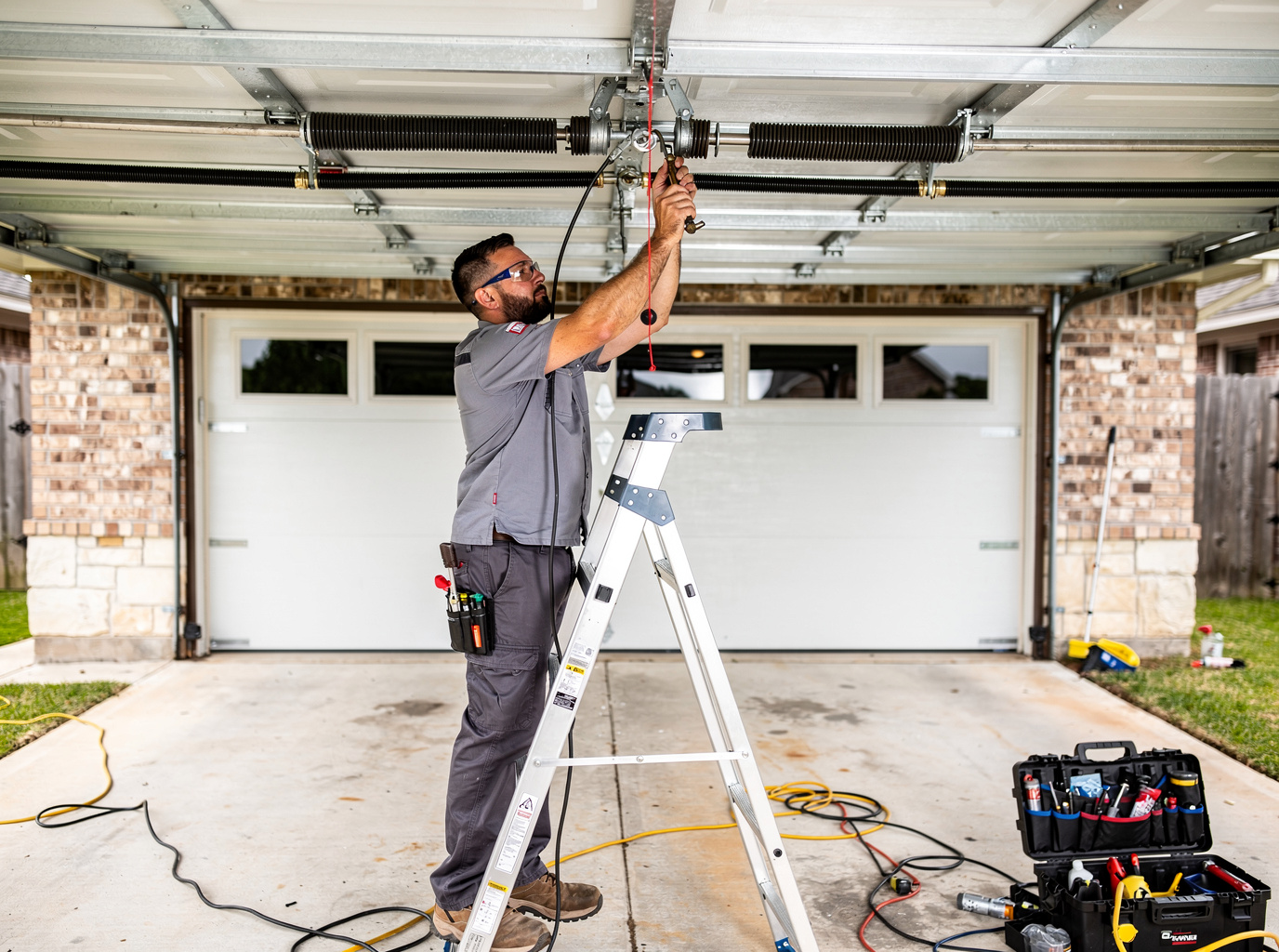
Garage doors in Houston work harder than most homeowners realize. Long stretches of heat and humidity wear on steel springs, lift cables, and photo-eye sensors that were never built for this climate. Garage Door Repair Houston TX works out of 7763 Hammerly Blvd and takes calls from homes around Hammerly, Memorial, and Spring Branch. Whether your door is stuck halfway, shaking on its way up, or refusing to close, we find the actual fault before recommending a part, and we explain it before anything is ordered.
Why Choose Garage Door Repair Houston TX
Choosing a garage door company is mostly about whether you can trust what they tell you. We start with a physical address you can visit: 7763 Hammerly Blvd, Houston, TX 77055. If you want to see where the work comes from, you can come by rather than wondering who is behind a phone line.
We inspect the door first and explain the findings and the scope in writing before any repair begins. That explanation lists the part, the reason for it, and the labor involved, so there are no surprises when the job is finished. If a simpler fix will hold up, we tell you that first. If a spring or cable has reached the end of its life, we explain how we reached that conclusion and show you the worn component in your hand.
We also keep the failed parts when you want them. A broken torsion spring, a frayed cable, or a cracked sensor bracket is something you can inspect yourself. Good work should be visible. We would rather you understand what failed than simply take our word for it.
Our approach is straightforward. We secure the door before touching tension components, we test the door through a full open and close cycle, and we check balance, travel limits, and safety reversal before we hand it back. We do not start spring work without a clear plan, and we do not pressure you into upgrades your door does not need. The goal is a door that works, a clear explanation of why, and findings and a scope you can review at your own pace.
Why Garage Door Problems Get Worse Right Now
Houston timing matters for garage doors. Summer heat expands steel and softens lubricant, which increases the load on torsion springs during the hottest part of the day. Once the humidity settles in, surface rust starts forming on coil wraps and cable drums, and that corrosion makes springs fatigue faster than the manufacturer's expected life on a dry-climate door.
Hurricane season, which runs roughly from June through November, adds another layer of trouble. Heavy wind can shift tracks, and standing water in a garage can short out opener controls and damage the wiring that runs to wall switches and sensors. Many homeowners notice a door acting strangely only after a storm passes, which is exactly when a small misalignment can start putting uneven stress on a spring.
Clay soil is common across much of the Houston area, and it expands and shrinks with moisture. Slab movement can nudge a garage floor out of level, which throws off track alignment and causes one side of a door to carry more weight than the other. Over time that uneven load wears out a spring, a roller, or a cable long before the rest of the door is worn.
Waiting has its own downside. A spring that breaks while the door is closed is inconvenient. A spring that breaks while someone is lifting the door can strip the cable, bend the track, or damage the opener motor. Addressing a weakening spring or a drifting sensor early usually means a smaller, simpler repair than the one you would face after a sudden failure.
How We Handle Garage Door Spring Repair and Replacement Properly
Spring work is the most dangerous part of garage door service, and it is also where shortcuts cause the most damage. Our process is built around securing stored energy before anything else happens.
First, we confirm the failure. We look at the torsion or extension springs, the cable drums, the lift cables, and the center bearing plate, and we check whether the door is still hanging from the spring system or resting on the opener. Next, we secure the door with locking pliers and clamps on the track so it cannot drop while we work. When replacement is needed, we use the correct winding bars and measure the spring to match the door's weight and height. The winding process is measured carefully, and the balance is checked before we call the job complete. Finally, we test the door through full open and close cycles, check the balance by lifting it manually halfway, and walk you through the old and new parts before we leave. No one should accept a repair they have not seen.
A Houston Garage Door Scenario Worth Knowing About
Consider a two-car garage in an older Hedwig Village-area home with the original torsion springs still in place after years of use. The homeowner heard a loud bang one morning and found the door would not lift more than a few inches. The opener strained, then stopped, and the door sat heavy on its track.
In a typical Houston scenario like this, the broken spring is often accompanied by a second spring that is close to failing, and the sudden loss of tension puts extra load on the lift cables. A technician who replaces only the broken spring leaves the other one to fail within weeks, often at the worst possible time.
The right fix is to secure the door, inspect both springs and both cable drums, and replace the springs as a matched pair when the door uses two. The door is then tested through full open and close cycles, and the homeowner is shown the old springs and the reason they failed.
Garage Door Spring Repair and Replacement Types We Work On
Torsion Spring Replacement
Torsion springs sit on a steel shaft above the door opening and wind up to counterbalance the door's weight. When one breaks, the door becomes too heavy for the opener to lift, and the opener will strain or stop. Replacing a torsion spring means measuring the wire size, inside diameter, and length so the new spring matches the door's weight and height. The door is then tested for balance and smooth travel before the job is called complete.
Extension Spring Replacement
Extension springs run along the horizontal tracks on each side of the door and stretch as the door opens. They are lighter than torsion systems and often used on smaller or single-car doors. When they break, the door can become uneven, and the safety cables may be the only thing holding the spring. Extension spring replacement starts with inspecting the safety cables, the pulleys, and the track, and ends with a balance check and a test of the door's travel.
Technician insight
In Houston, the thing that catches most people out with Garage Door Spring Repair and Replacement is that a broken spring often looks like an opener problem. The door feels heavy, the motor strains and cuts out, and people replace the opener before anyone checks the spring. Around here, humidity and seasons of heat make torsion springs fatigue quietly, so one snapped spring on an older Memorial-area home usually means the other is close behind.
Torsion Spring Snap on a Hedwig Village Two-Car Door
The homeowner heard a loud bang, and afterward the opener hummed but the door would not lift. On inspection, one torsion spring had broken near the center bracket, the other showed gapped coils and surface rust, and one lift cable had slipped off its drum. We secured the door, replaced both springs as a matched pair, and corrected the cable and drum before testing travel and balance. The door lifted smoothly afterward and the opener stopped straining.
Garage Door Spring Repair and Replacement Services We Offer
✓Garage Door Sensor Repair
Garage door safety sensors sit low on each side of the door and must be aligned and clear to reverse the door when something blocks the path. Houston's humidity, dust, and storm-driven debris can knock them out of line or fog their lenses. We check wiring, alignment, mounting brackets, and the status light pattern, then clean or replace the sensor pair as needed. Sensor fixes are usually quick, and we test the auto-reverse function before we leave.
✓Garage Door Maintenance
Routine maintenance keeps springs, rollers, hinges, and tracks moving smoothly in a climate that is hard on metal. We inspect hardware for loose bolts, check roller wear, lubricate moving parts with the correct product, and look for early signs of spring fatigue or cable fraying. A maintenance visit gives you a clear picture of what needs attention now and what can wait, so small problems do not turn into breakdowns during a hot week.
✓Automatic Garage Door Repair
When the door moves but the opener does not behave correctly, the fault may be in the motor, the logic board, the remote receiver, or the travel limit settings. We diagnose opener problems step by step, checking power supply, wall control wiring, remote programming, and safety reversal before recommending a part. Storm-related water intrusion can damage control boards, so we inspect for moisture and corrosion as well. Opener work is explained in writing before any component is replaced.
How it works
- 1
Describe the Problem and Confirm the Symptoms
We start by asking what the door is doing: stuck, crooked, loud, slow, or refusing to respond. Knowing whether the door moves at all, whether the opener runs, and whether the problem began after a storm helps us narrow the cause before we arrive.
- 2
Inspect the Door and Spring System
We check torsion or extension springs, lift cables, cable drums, the center bearing plate, rollers, and tracks. We look for gaps between coils, rust, frayed cable strands, and uneven tension, then confirm which component is actually responsible for the symptom.
- 3
Secure the Door Before Any Tension Work
Before touching a spring, we secure the door with locking pliers and clamps so it cannot drop. We never wind or unwind tension components by hand and do not start spring work without a secured door and the correct winding bars.
- 4
Explain the Findings Before Work Starts
We walk through what failed, why it failed, and what the fix involves. We set out the findings and the scope in writing, listing the parts and labor, before work begins, and we keep the removed parts on request so you can see the wear for yourself.
- 5
Test, Balance, and Confirm Safety
After the repair, we run the door through full open and close cycles, check balance at the halfway point, and confirm the auto-reverse function. We leave the door in the condition we would want for our own garage and explain any follow-up items.
Pricing
We inspect the door first and explain the findings and the scope in writing before any work begins, so the scope and parts are clear before you agree to anything.