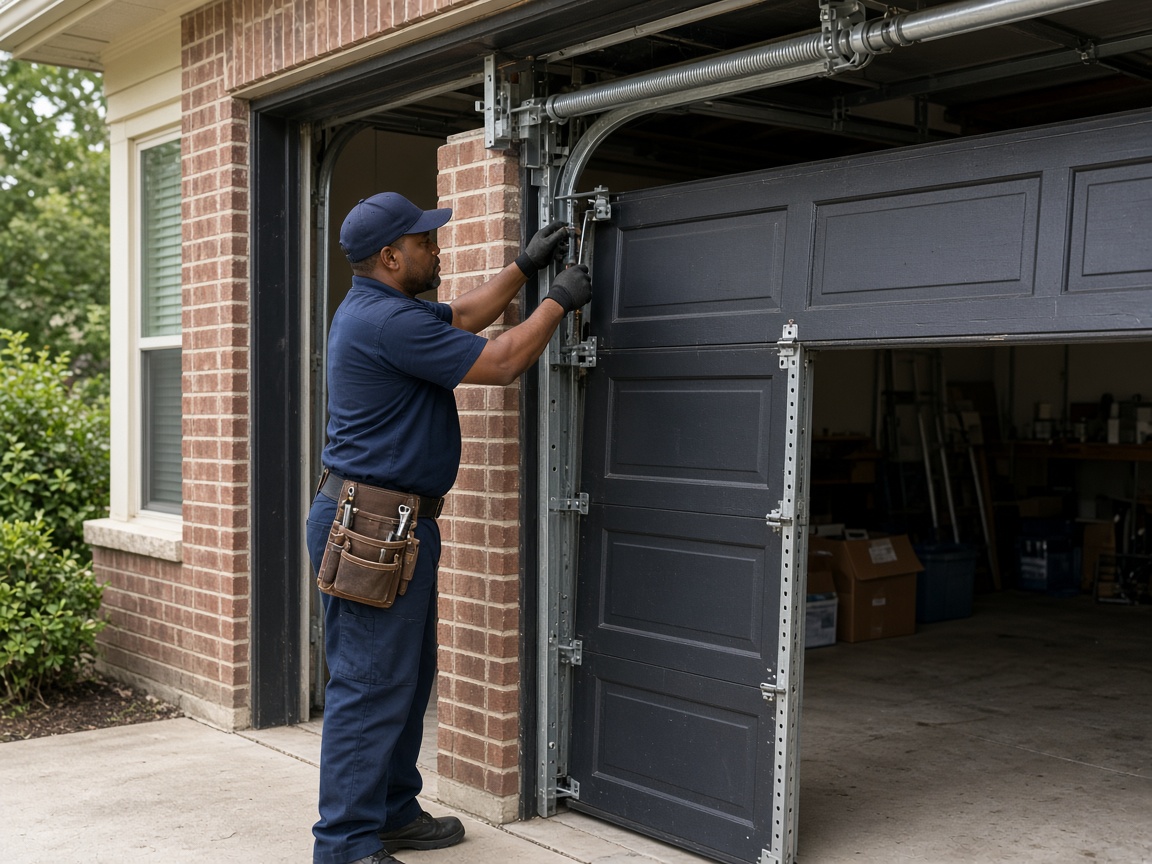
Garage door trouble rarely waits for a convenient day. A door that stalls halfway up, a panel that rattles like a loose cart wheel, or a remote that suddenly stops responding can leave a car stranded in the driveway during a Houston morning commute. Our team at 7763 Hammerly Blvd handles garage door repair for homes across the city, from older brick ranches near Memorial to newer builds on the west side. We find the actual fault, explain it in plain language, and set out the findings and the scope in writing before anything is touched, so the decision stays yours.
Why Choose Us
Most garage door problems look dramatic from the driveway but come down to a handful of worn or misaligned parts. We start by testing the system rather than guessing. We run the door through full open and close cycles, watch how the cables and tracks behave under load, and check whether the opener is pulling the door evenly. You see what we see. When we recommend a part, we show you the worn component, point out the hairline crack, flattened roller tire, or frayed cable, and explain why it matters.
We work on the common residential door styles found across Houston neighborhoods, including steel sectional doors, insulated panel doors, and older wood carriage-style doors that have been converted to modern hardware. We carry the common torsion spring sizes, roller types, and opener components, which means many repairs are finished in a single visit rather than scheduled for a return trip. Our findings are set out in writing line by line, listing parts and labor separately, so you can see exactly what is included.
We clean up after ourselves, keep the work area clear of loose hardware, and test the door with you before we leave. If a repair is not the right answer, we say so and explain the alternative. Our goal is a door that moves smoothly, stops where it should, and stays that way.
Why Now
Houston garage doors work harder than the manufacturers often assume. Summer heat pushes interior temperatures in attached garages well past what the surrounding air suggests, and that heat softens the lubricant in rollers and hinges while expanding steel panels just enough to change how they seat in the tracks. Humidity works on the other side of the equation. Moisture settles into springs, cable drums, and bottom brackets, and the result is surface rust that slowly reduces the strength of the metal long before anything visibly breaks.
Storm season adds its own pressure. Heavy rain drives water under the bottom seal and into the lower panel, and wind-driven rain finds gaps around weatherstripping that were already compromised. Once a door is saturated, the bottom bracket and hinge area can corrode faster than expected. Many homes in the 77055 area sit on clay soils that expand and shrink with moisture, which can shift slab edges and throw track alignment out of square. A door that was adjusted correctly a few years ago may now bind at one side.
Waiting can make the original problem worse. A worn torsion spring that is still working can fail suddenly, and when it does, the door can drop hard enough to damage the opener, bend the track, or crack a panel. A roller that is slowly seizing puts strain on the opener motor and the cable, and the motor will eventually burn out. Addressing a small noise, a slow reversal, or a door that is hesitating on its way up is almost always simpler than replacing the components it damaged. If your door has changed behavior in the last few weeks, it is worth having it looked at before the next storm or the next heat wave.
Proof: How We Do the Work Properly
Good repair work is methodical, and you should be able to see the method. Our process starts with a conversation about what you have noticed, when it started, and whether it changes with weather or use. That history narrows the search before we pick up a tool.
Next we inspect the door by hand, with the opener disconnected. We check springs for gaps between coils and signs of stretching, examine cables for fraying or kinks, look at rollers for flat spots and cracked tires, and measure how the tracks sit against the wall and ceiling. We confirm the door is balanced, meaning it stays put when lifted halfway and does not drift up or down. An unbalanced door is the source of many openers that seem to fail early.
Once the fault is identified, we show you the affected part and explain the repair in writing before proceeding. After the repair, we reconnect the opener, run several full cycles, test the safety reversal with a test object, and confirm that the sensors and remote respond correctly. Finally, we walk through the results with you, note any maintenance interval we recommend, and leave you with a written summary of what was replaced and what was adjusted.
Unique Scenario: A Storm-Stressed Door on a Cul-de-Sac
Picture a single-story home with an attached two-car garage, a steel sectional door about a decade into its service life, and an opener mounted on a ceiling rail. After a line of thunderstorms moved through, the homeowner noticed the door started rising slowly, then jerked at the top of its travel, then began reversing before fully closing. Nothing had been hit, and there was no obvious dent. The concern was that the door might fail completely the next time it was used.
When we arrived, the first thing we did was run the door by hand after disconnecting the opener. It lifted unevenly, with the left side heavier than the right. We looked at the springs and found one torsion spring showing a visible gap between coils near the center, a sign of fatigue that was accelerated by the humidity and the rapid temperature swings that storms bring. The cable drum on that side also showed light surface rust where water had been pooling. The rollers were fine, but the bottom bracket had a small bend from water pressure during the storm.
We replaced the worn spring as a matched pair, since a spring that has been fatigued usually signals the other spring is close behind. We cleaned and lubricated the cables and drums, straightened the bottom bracket, and rebalanced the door to confirm it held at mid-height without drifting. We then reconnected the opener, adjusted the travel limits, and tested the safety reversal with a test object on the floor. The door now lifts evenly, stops where it is set, and closes without hesitation. The homeowner was given a short list of inspection points for the next storm season, including checking the bottom seal and clearing debris from the track ends before heavy rain.
Situations like this are common in Houston because the same weather that drives summer heat and frequent storms also keeps moisture working on metal parts all year. Catching the early signs of spring fatigue and drum corrosion is far simpler than dealing with a door that has dropped or stopped mid-travel. Each door has its own history, so the right repair always depends on what the inspection actually shows.
Garage Door Repair Components Explained
Torsion Springs and Why They Matter
Torsion springs are the large coiled springs mounted on a shaft above the door opening, and they carry most of the door's weight so the opener does not have to. A standard residential door is typically counterbalanced by a pair of these springs, and each is rated for a specific number of cycles. Over time, the wire fatigues and the coils can stretch or gap. Signs include a door that lifts unevenly, a loud bang when the spring finally lets go, or a door that sits crooked when closed. Replacement should always be done as a pair, sized to the door's weight and height. Working on springs carries real risk because they store a lot of tension, so this repair is always done with the proper tools and a controlled process.
Rollers, Hinges, and Track Alignment
Rollers ride inside the tracks and carry the door through its arc, and they come in steel and nylon versions with ball bearings or sealed stems. Nylon rollers can crack in heat, while steel rollers can wear flat spots and seize when lubrication runs out. Hinges connect the door panels together and can loosen or bend when a door has been forced. Track alignment is equally important: a track that is out of plumb or not parallel to the opposite side will cause binding, grinding, and uneven loads that wear the rollers quickly. Checking these components together gives a clearer picture than replacing one part in isolation.
The Opener Logic Board and Drive Components
The opener is the motorized head that moves the door, and its logic board controls travel limits, remote signals, safety inputs, and the light circuit. When an opener stops responding, the cause is often a failed relay, a loose wire at the logic board, a blown fuse, or a corroded terminal rather than a dead motor. Drive chains and belts stretch over years of use and can skip teeth, which leaves the door stuck or causes a clicking sound at the start of travel. Checking the drive, the limit settings, and the wiring before replacing the entire opener avoids further damage and keeps the door in service while the diagnosis is confirmed.
Next Step: Get Your Door Checked Before It Stops Working
If your door is noisy, slow, uneven, or simply not responding the way it used to, the next step is a straightforward inspection. We will test the door, explain what we find, and set out the findings and the scope in writing before any repair begins. You can ask questions at every stage and decide which work to move forward with.
For homeowners who want to stay ahead of trouble, a short seasonal check helps. Before the summer heat sets in and again before storm season, look for loose hardware, frayed cables, gaps in the weatherstripping, and any change in how the door moves. Clear debris from the track ends, keep moving parts lightly lubricated with a silicone-based product rather than heavy grease, and note any new sound or hesitation. Early attention almost always leads to simpler repairs.
Technician insight
In Houston, the thing that catches most people out with garage doors is how fast a worn torsion spring gets worse once humidity and heat start working on it. We have been to plenty of homes where a door was lifting unevenly for months and nobody connected it to the spring. If your door starts rising crooked or jerking at the top, get it looked at before the next heavy rain or heat stretch, because a spring that fails suddenly can take the opener and the track down with it.
Storm-Stressed Door After a Line of Thunderstorms
The homeowner noticed the door rising slowly, jerking near the top, and reversing before fully closing after a storm passed through. Inspection found one torsion spring with visible gaps between coils, surface rust on the cable drum, and a bent bottom bracket. We replaced the springs as a matched pair, cleaned and lubricated the cables, straightened the bracket, and rebalanced the door. The door now lifts evenly, stops where set, and closes reliably.
Garage Door Installation and Replacement Services We Offer
✓Sensor Repair in Houston
Garage door safety sensors sit low on each side of the opening and must see each other clearly for the door to close. Misalignment from a bumped bracket, a faded wire, or a sensor lens coated with dust and grime will stop the door from closing or cause it to reverse unexpectedly. We check alignment, wiring continuity, and lens condition, then test the reversal response. Many sensor issues come down to a few degrees of misalignment or a damaged wire near the wall, and most are straightforward to
✓Garage Door Maintenance in Houston
Routine maintenance keeps the door balanced, quiet, and safe through Houston's heat and humidity. A typical visit includes lubricating rollers, hinges, and bearings with an appropriate product, inspecting cables and drums, checking spring condition, tightening hardware, and confirming the door balances and reverses correctly. We also look at the weatherstripping and bottom seal, which handle water and dust. Scheduled maintenance catches the early wear that otherwise becomes an emergency repair d
✓Automatic Garage Door Repair in Houston
Automatic openers combine a motor, a drive system, a logic board, and remote controls, and failures often look similar from the driveway. A door that will not respond to the remote, a motor that hums without moving the door, or a unit that reverses for no clear reason can have several causes. We test the remote and wall control, check the logic board and fuses, inspect the drive belt or chain, and confirm the travel limits. The goal is to repair the opener where it makes sense and to explain cle
How it works
- 1
Initial Conversation and Visual Check
We start by asking what you have noticed, when it began, and whether the problem changes with temperature, rain, or how often the door is used. We then look at the door, tracks, springs, cables, and opener from the outside to form a first picture before any parts are moved.
- 2
Hands-On Inspection and Testing
With the opener disconnected, we operate the door by hand to check balance, smoothness, and track alignment. We examine springs, cables, rollers, hinges, and the bottom bracket, then run the door through several full cycles to observe how it behaves under load.
- 3
Findings Explained Before Any Work
Once the cause is identified, we explain the repair in plain language, show you the affected parts, and set out the findings and the scope in writing, listing parts and labor separately. Nothing proceeds until you have seen the findings and agreed to the scope of work.
- 4
Repair and Adjustment
We complete the agreed repair using the correct parts and tools, adjust the balance and travel limits, and reconnect the opener. Any spring work is done with controlled tension procedures and proper equipment, because the stored energy in these components demands it.
- 5
Final Testing and Walkthrough
We run the door through repeated cycles, test the safety reversal with a test object, confirm remote and wall control operation, and check sensor response. We then walk you through what was replaced and adjusted, and note any maintenance items to watch.
Pricing
Every job starts with the findings and the scope set out in writing, based on the parts and labor your specific door needs, so you can review the scope before approving any work.