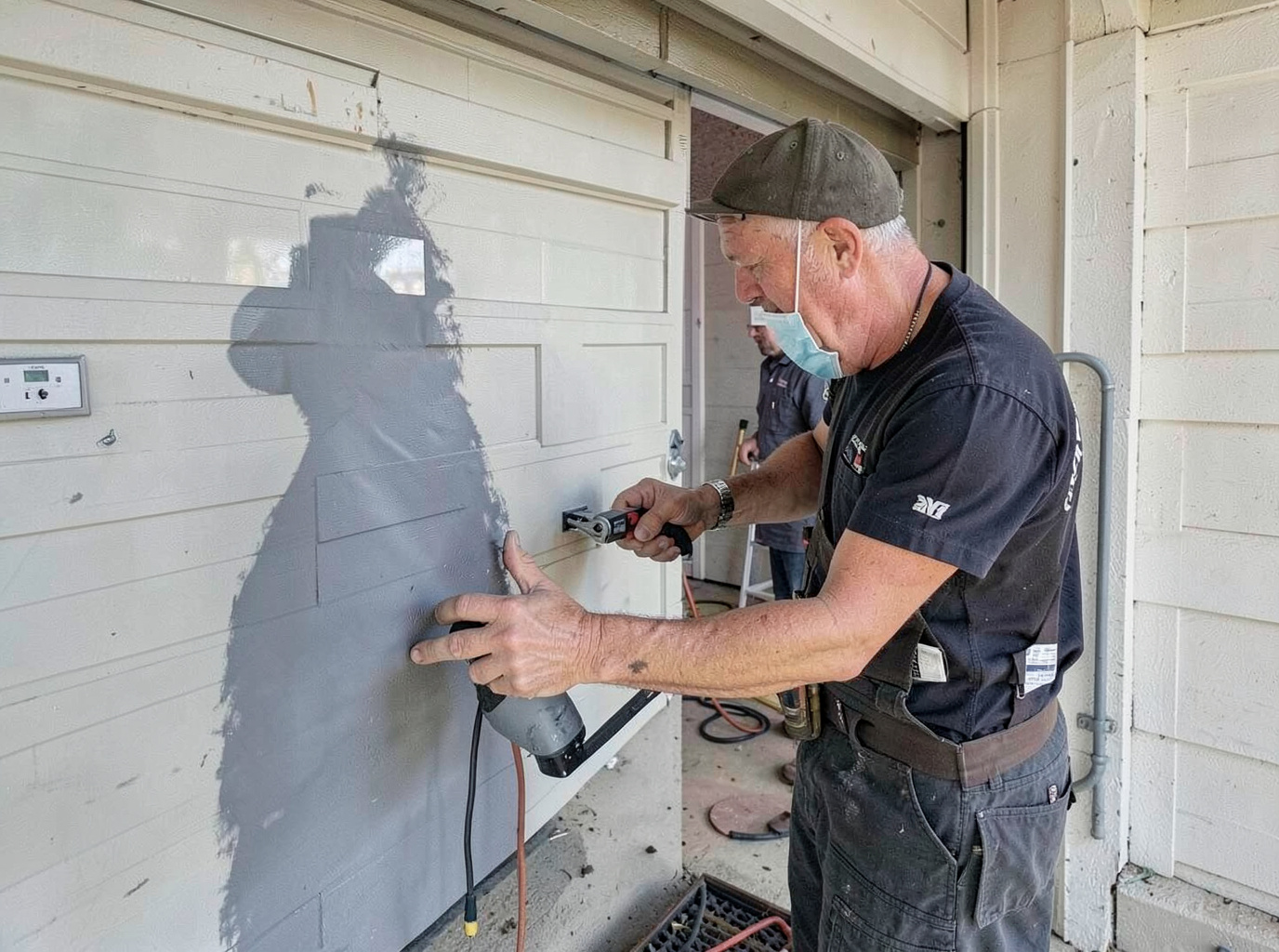
Garage Door Repair in Houston, TX starts at 7763 Hammerly Blvd, where we work on the springs, cables, openers, sensors, and tracks that keep a Houston garage door running through long summers, heavy humidity, and the occasional hard storm. If your door stops halfway, grinds through its cycle, or ignores the remote, we will identify the failed component, show you the wear, and explain the repair before anything is taken apart. Our goal is a clear diagnosis and a fix that lasts in a climate that is hard on steel, wiring, and motors alike.
Why Choose Us for Garage Door Repair in Houston
Homeowners in the Spring Branch and Memorial-area neighborhoods around Hammerly Blvd deserve a repair company that shows its work. We inspect the door first and explain the findings and the scope in writing before any parts are ordered, so you know what is broken, what it will take to fix, and what you are approving. When we replace a spring, cable, roller, or logic board, we can show you the worn part we removed so you can see the wear for yourself. We explain the difference between a quick adjustment and a component that needs replacing, and we will tell you when a repair is not the right call on an aging door. Our crews work from a documented checklist on every visit, which keeps results consistent from one call to the next. We value straightforward communication: you will hear what we found, what we recommend, and what happens next, in plain language. Many of our repeat calls come from people who want a second opinion on work another company recommended, and we welcome that. The most useful thing we can offer is a repair you can understand and verify yourself.
Why Garage Door Repair Matters Now in Houston
Houston garage doors live a harder life than most. Once summer temperatures climb past the nineties, steel torsion springs lose tension, lubricants thin out, and sun-baked door panels push against their tracks. Humidity then works the other direction, promoting rust on hinges, rollers, and bottom brackets that were never meant for constant moisture. Storm season, which runs roughly from June through November along the Gulf Coast, brings wind-driven rain that can warp weatherstripping, lift door bottoms, and corrode exposed hardware. Power interruptions during storms also expose weak openers, because a door that will not respond once the grid returns leaves families stranded outside. Many homes in the Memorial and Spring Branch area still carry original builder-grade doors and openers that have now been running for many years, so wear accumulates quietly until something snaps. Waiting on a small problem usually turns a simple adjustment into a larger failure, such as a broken spring that also damages a cable drum or an opener motor that burns out after repeated strain. Acting early keeps the repair contained, and it keeps your garage usable when you need it most.
How We Perform Garage Door Repair the Right Way
A repair is only as good as the process behind it. We begin with a visual inspection of the door panels, tracks, hinges, rollers, and cables, checking for bent sections, frayed cable, and uneven movement. Next we test the door by hand and with the opener, watching for binding, sagging, or a door that drifts when it should hold position. We then check the safety systems, including the photo-eye sensors and the auto-reverse force setting, because a door that will not reverse on contact is a hazard that must be corrected first. After identifying the failure, we set out the findings and the scope in writing, naming the part, the reason for replacement, and the work involved. Once you approve, we install the component, balance the door, and lubricate moving parts with the correct product for the application. Finally, we run the door through several full open and close cycles, confirm sensor alignment, and walk you through what we changed so you know how to spot early warning signs next time.
Scenario: Opener Installation After a Houston Storm Outage
A homeowner near Hammerly Blvd called after a summer thunderstorm knocked out power to the neighborhood overnight. The old chain-drive opener still worked, but the garage door would not close fully and kept stopping just above the floor, and the remote gave no response once power came back. Our technician inspected the opener, found the logic board had failed after repeated power surges, and noticed that the old unit was also too weak for the heavy wood-and-steel door it was carrying. We explained that a replacement opener would only be reliable if the door balance, safety sensors, and wall-control wiring were checked at the same time. We recommended a belt-drive opener suited to the door weight, reset the torsion spring tension, realigned the photo-eye sensors, and tested the auto-reverse force. The homeowner saw the findings and the scope set out in writing before installation, saw the old logic board, and left with a door that closed smoothly and reversed correctly when tested. The outcome was a quieter, more dependable system that handles Houston's humid, storm-prone seasons far better than the unit it replaced.
Torsion Springs and Cable Drums
Torsion springs carry most of the weight of a modern garage door, storing energy in a steel coil mounted on the shaft above the opening. Their rated cycle life depends on size, spring material, and how often the door is used, so a busy household can wear one out much sooner than expected. Cable drums are paired with the springs and wind the lift cables as the door moves. When a spring breaks, the drum and cable carry the load suddenly, which is why a broken spring often takes out both parts together. We check spring winding, cable seating, and drum wear during every spring-related visit. Replacing only one component without inspecting the others is a common mistake that leaves the door straining. We recommend matched replacement and proper balance testing so the door opens smoothly without straining the opener.
Photo-Eye Sensors and Safety Reversal
Photo-eye sensors sit near the floor on each side of the door and project an invisible beam across the opening. If the beam is interrupted while the door is closing, the opener must stop and reverse, which protects children, pets, and vehicles. Sensors commonly fail from misalignment after a bump, a loose bracket, or wiring that has corroded in humid conditions. Sun glare can also confuse the receiver on bright afternoons. We check both lenses for dirt and spider webs, confirm the indicator lights are steady, and test the reversal by placing a test object in the path. Auto-reverse force settings should be verified after any sensor work. A sensor that reads correctly but a reversal force that is set too high is still a hazard, so we test both together every time.
Belt-Drive and Chain-Drive Openers
Chain-drive openers are durable and a practical choice for many older doors, but they run louder because metal links move over a steel rail. Belt-drive openers use a reinforced rubber belt, which runs much quieter and suits rooms attached to living space. Both types depend on a motor, a gear set, a trolley, and a logic board that manages travel limits and force settings. Houston heat can soften lubricants and stress motor windings, while storm-related power surges damage control boards. We look at motor horsepower relative to door weight, the condition of the trolley and rail, and the travel limit settings. An undersized opener strained by a heavy or poorly balanced door will fail early, so matching the opener to the door is part of a proper repair.
Prevention Tips for Houston Garage Doors
A few simple habits extend the life of your door through hot, wet seasons. Keep the tracks and rollers clean, and lubricate hinges, rollers, and springs with a lubricant made for garage doors rather than general oils that attract dust. Check weatherstripping along the bottom seal each spring and replace it when it cracks, since gaps let rain and heat into the garage. Listen for grinding or popping, which often signals a worn roller or loose hardware before a larger failure appears. Test the auto-reverse feature monthly by placing a board in the closing path, and test the photo-eyes by waving an object through the beam while the door is closing.
Seasonal Garage Door Checklist for Houston
Before storm season begins in early summer, inspect the door panels for cracks or dents, confirm the tracks are tight, and make sure the bottom seal is intact. During peak heat, watch for slow or uneven movement, which can mean springs are losing tension or the opener is working harder than it should. Ahead of hurricane season, test the manual release so you can open the door if power fails, and keep the release cord within reach. In late fall, check for rust on hardware, confirm sensors are clean and aligned, and lubricate moving parts once the worst humidity has passed. A quick seasonal review catches most problems before they leave you stuck outside.
Technician insight
In Houston, the thing that catches most people out with Garage Door Opener Installation is the door itself, not the opener. Years of humid heat and storm-driven moisture leave springs and hardware worn well beyond what the door looks like from the driveway. We would rather check tension, balance, and the photo-eye sensors before bolting in a new unit, because a strong opener on an unbalanced door just fails faster.
Opener Replacement After a Storm Outage Near Hammerly Blvd
A homeowner near Hammerly Blvd had an old chain-drive opener that stopped working after a storm surge, and the door would not close fully. We found a failed logic board and an opener too weak for the heavy door, so we recommended a belt-drive replacement along with spring tension and sensor checks. The homeowner saw the findings and the scope set out in writing before installation and left with a quieter door that reverses correctly when tested.
Garage Door Opener Installation Services We Offer
✓Sensor Repair
Photo-eye sensors protect people and vehicles by reversing the door when the beam is blocked. We inspect alignment, clean lenses, check wiring for corrosion, and test reversal so the door responds safely every time it closes.
✓Garage Door Maintenance
Routine maintenance keeps springs balanced, rollers quiet, and openers working within their rated limits. We lubricate moving parts, tighten hardware, inspect cables and seals, and point out wear before it becomes a breakdown.
✓Automatic Garage Door Repair
When an automatic door will not open, closes unevenly, or stops mid-cycle, we check the opener, logic board, travel limits, and safety systems together. We explain what failed and what the repair involves before any work begins.
How it works
- 1
Inspect and Test
We examine the door, tracks, springs, cables, and opener, then run the door by hand and by remote to find where the problem begins.
- 2
Explain the Findings
We show you the worn or failed parts and describe what caused them, so the diagnosis is clear before any decisions are made.
- 3
Set Out the Scope in Writing
We set out the findings and the scope in writing, naming each part and the work involved. Nothing is ordered or replaced until you approve it.
- 4
Repair and Balance
We install the approved components, adjust spring tension or travel limits, and lubricate moving parts with the correct product.
- 5
Verify Safety Systems
We test the auto-reverse force and photo-eye sensors with a test object, then run several full cycles to confirm smooth operation.
Pricing
Every job starts with the findings and the scope set out in writing, listing each part and the work involved, so you can review the scope before approving anything.